
Spondylolisthesis
Spondylolisthesis is a spinal condition characterized by the misalignment of one vertebra slipping forward over the one below it. This misalignment can cause discomfort and affect an individual’s quality of life. In this article, we’ll explore the causes, symptoms, and treatment options for spondylolisthesis, offering a thorough understanding of the condition.
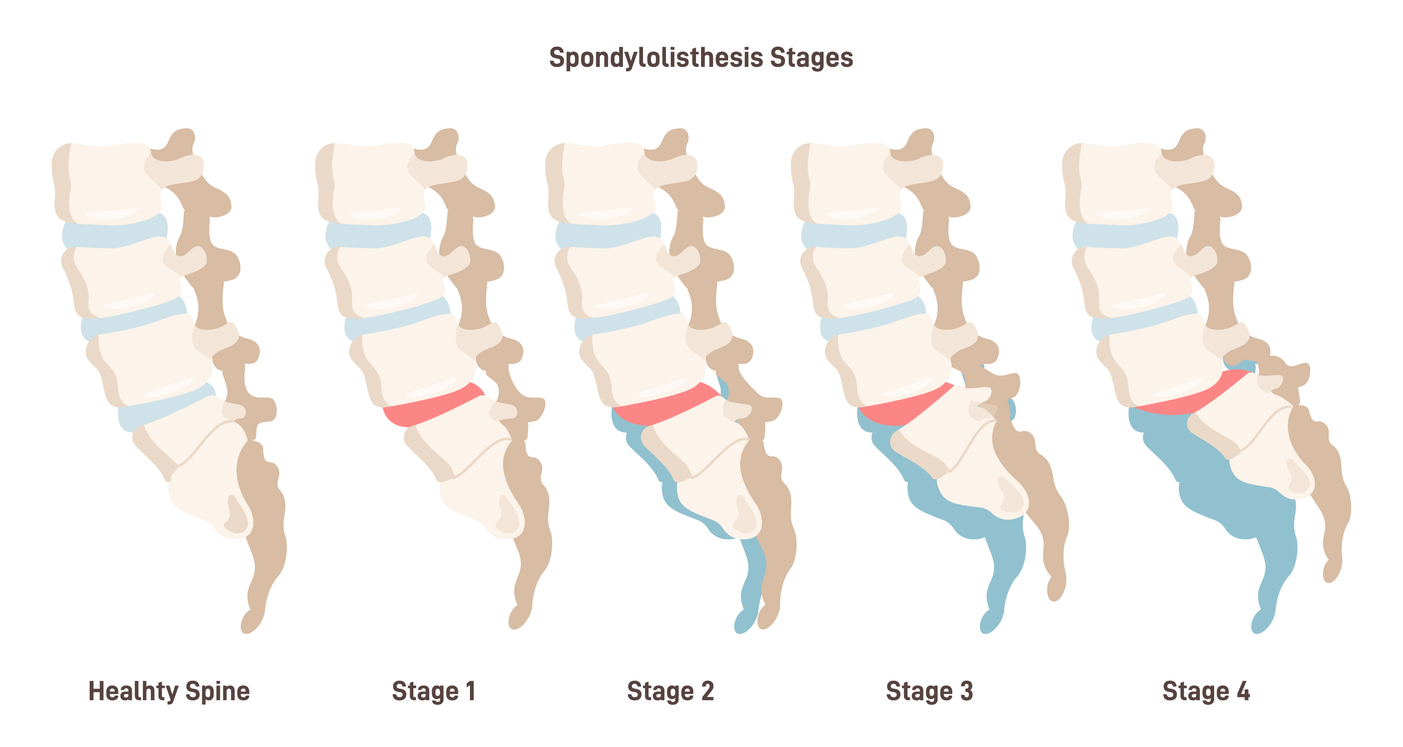
What is Spondylolisthesis?
Spondylolisthesis occurs when one vertebra shifts forward over the vertebra directly beneath it. Although this condition can affect any part of the spine, it is most commonly found in the lower back (lumbar spine). The severity is typically classified on a scale from I to IV, depending on the degree of slippage.
Causes of Spondylolisthesis
Spondylolisthesis can arise from a variety of factors, generally classified into five main categories: congenital, degenerative, traumatic, pathological, and post-surgical.
- Congenital spondylolisthesis
Present at birth, this type results from abnormal spinal bone formation. - Degenerative spondylolisthesis
The most common form, typically affecting older adults, caused by gradual wear and tear on the spine over time. - Traumatic spondylolisthesis
Occurs due to a direct injury or trauma that affects the vertebrae. - Pathological spondylolisthesis
Develops from bone diseases or tumors that weaken the spinal vertebrae. - Post-surgical spondylolisthesis
May occur following spinal surgery, often due to weakened structures or changes in load distribution on the spine.
Symptoms of Spondylolisthesis
The symptoms of spondylolisthesis can vary greatly based on the extent and location of the vertebral slippage. While some individuals may experience no symptoms, others might endure chronic pain.
Common symptoms include:
- Lower back pain
- Stiffness or tightness in the back and legs
- Muscle spasms
- Pain radiating down the legs, potentially affecting the buttocks and thighs
- Numbness, tingling, or weakness in the lower extremities
- Difficulty walking or alterations in gait
Diagnosis of Spondylolisthesis
Diagnosing spondylolisthesis usually involves a physical examination followed by imaging tests. X-rays are effective for detecting vertebral slippage, while MRI or CT scans provide detailed views to evaluate the impact on nerves and surrounding tissues.
Treatment Options for Spondylolisthesis
Treatment approaches for spondylolisthesis depend on the severity of the condition and the symptoms experienced. Options range from conservative management to surgical interventions:
- Conservative Treatments
These may include physical therapy to strengthen the muscles supporting the spine, pain relief medications, and sometimes corticosteroid injections to reduce inflammation around affected nerves. - Surgical Treatments
Surgery might be considered if conservative measures are ineffective or if there is significant vertebral slippage. Common procedures include spinal fusion, which joins two or more vertebrae to stabilize the spine, and, in some cases, decompression surgery to relieve pressure on spinal nerves.
Lifestyle and Prevention
Adopting a healthy lifestyle can be pivotal in managing and preventing spondylolisthesis. Engaging in regular exercise, particularly activities that strengthen the core muscles supporting the spine, is highly beneficial. Maintaining a healthy weight also reduces stress on the spine, which may help prevent further slippage.
Conclusion
Spondylolisthesis can significantly impact mobility and quality of life. Understanding its causes, recognizing symptoms, and seeking proper medical guidance are key to managing the condition. Through a combination of conservative treatments, surgical options, and lifestyle adjustments, many individuals with spondylolisthesis can enjoy active and fulfilling lives. Consulting with Dr. Paul Richard will help determine the most suitable treatment plan for your specific situation.